What Are Porcelain Veneers?
A porcelain veneer is a thin, custom-fabricated shell of dental ceramic bonded permanently to the front surface of a tooth. Each veneer is designed to match the shade, shape, and proportions of the surrounding teeth while correcting whatever cosmetic concern is being addressed on the treated tooth.
Veneers are custom-fabricated restorations created from precise impressions or scans of the teeth. The porcelain used in veneers is designed to mimic the light-reflecting properties of natural enamel, which is what gives well-made veneers their natural appearance under different lighting conditions.
Once bonded, veneers are permanent restorations. The preparation process involves removing a thin layer of enamel from the front of the tooth to create space for the veneer to sit flush with the surrounding teeth. Because enamel does not regenerate, the decision to get veneers is a long-term commitment that the Clear Essence Family Dentistry team discusses thoroughly with each patient before any treatment begins.
What Can Porcelain Veneers Correct?
Veneers are one of the more versatile cosmetic treatments available because a single procedure can address multiple concerns at once. Patients at Clear Essence use veneers to correct:
Permanent Discoloration. Some staining does not respond to professional whitening. Discoloration caused by tetracycline antibiotics, fluorosis, trauma to the tooth, or internal changes to the tooth structure falls into this category. Veneers cover the discoloration completely and provide a stable, long-lasting color that does not fade.
Chipped or Worn Teeth. Chips from impact, wear from grinding, and age-related erosion all change the shape of teeth in ways that affect both appearance and function. Veneers restore the original shape and protect the affected surface from further wear.
Gaps Between Teeth. Minor to moderate spacing between front teeth can be closed with veneers by fabricating the restorations slightly wider than the natural tooth. For the right case, this avoids the need for orthodontic treatment to close the gap.
Minor Misalignment and Unevenness. Teeth that are slightly rotated, overlapping, or uneven in length can appear significantly straighter with veneers without moving the teeth themselves. This approach is appropriate for mild cosmetic irregularities where the underlying bite is sound.
Worn or Short Teeth. Teeth that appear short due to wear or natural anatomy can be lengthened with veneers to improve smile proportions and overall facial aesthetics.
Shape Irregularities. Teeth that are unusually narrow, pointed, or irregular in shape can be corrected with veneers to create a more balanced, proportionate smile.
One of the first things the Clear Essence Family Dentistry team determines during a veneer consultation is whether veneers are the most appropriate treatment for the patient’s specific concern. Some issues may be better addressed with whitening, bonding, or orthodontics depending on the nature of the concern and the patient’s overall oral health. Patients leave the consultation with a clear understanding of their options and why one path may make more sense than the alternatives.
Porcelain Veneers vs. Composite Veneers — What Is the Difference?
Both porcelain and composite resin can be used to fabricate veneers, and patients sometimes ask about the difference when researching their options.
Porcelain Veneers. Porcelain veneers are fabricated in a dental lab from high-quality ceramic. They are stronger, more stain-resistant, and more durable than composite veneers, with a lifespan of ten to fifteen years or longer with proper care. The light-reflecting quality of porcelain more closely mimics natural enamel, making porcelain veneers the more aesthetic choice for the front teeth. They require two appointments — one for preparation and impressions, and one for bonding.
Composite Veneers. Composite veneers are made from the same tooth-colored resin used for dental bonding, applied and shaped directly on the tooth in a single appointment. They are less expensive upfront and require less or no tooth preparation in some cases, but they are more prone to staining, less durable, and typically need to be replaced or touched up more frequently than porcelain.
For patients seeking a long-lasting cosmetic result for their front teeth, porcelain is the stronger choice in most cases. The team will discuss both options with you and give you a straightforward recommendation based on your goals, your budget, and what is clinically appropriate for your teeth.
What to Expect From the Veneer Process at Clear Essence
Getting veneers at Clear Essence is a multi-appointment process. Here is what each stage involves.
Step 1 — Your Veneer Consultation
Your first appointment is a thorough consultation with Dr. Obhade. He examines your teeth and gum health, reviews your X-rays, and listens carefully to what you want to change about your smile. He discusses how many veneers would be needed to achieve your goal, what the preparation involves, what the result will look like, and what the long-term commitment means.
This is also the appointment where the team addresses any underlying oral health issues that need to be resolved before veneer treatment begins. Placing veneers over teeth affected by untreated decay or active gum disease produces results that do not hold up. If anything needs attention first, it will be identified and sequenced appropriately.
No treatment begins without your full understanding and agreement.
Step 2 — Smile Design and Planning
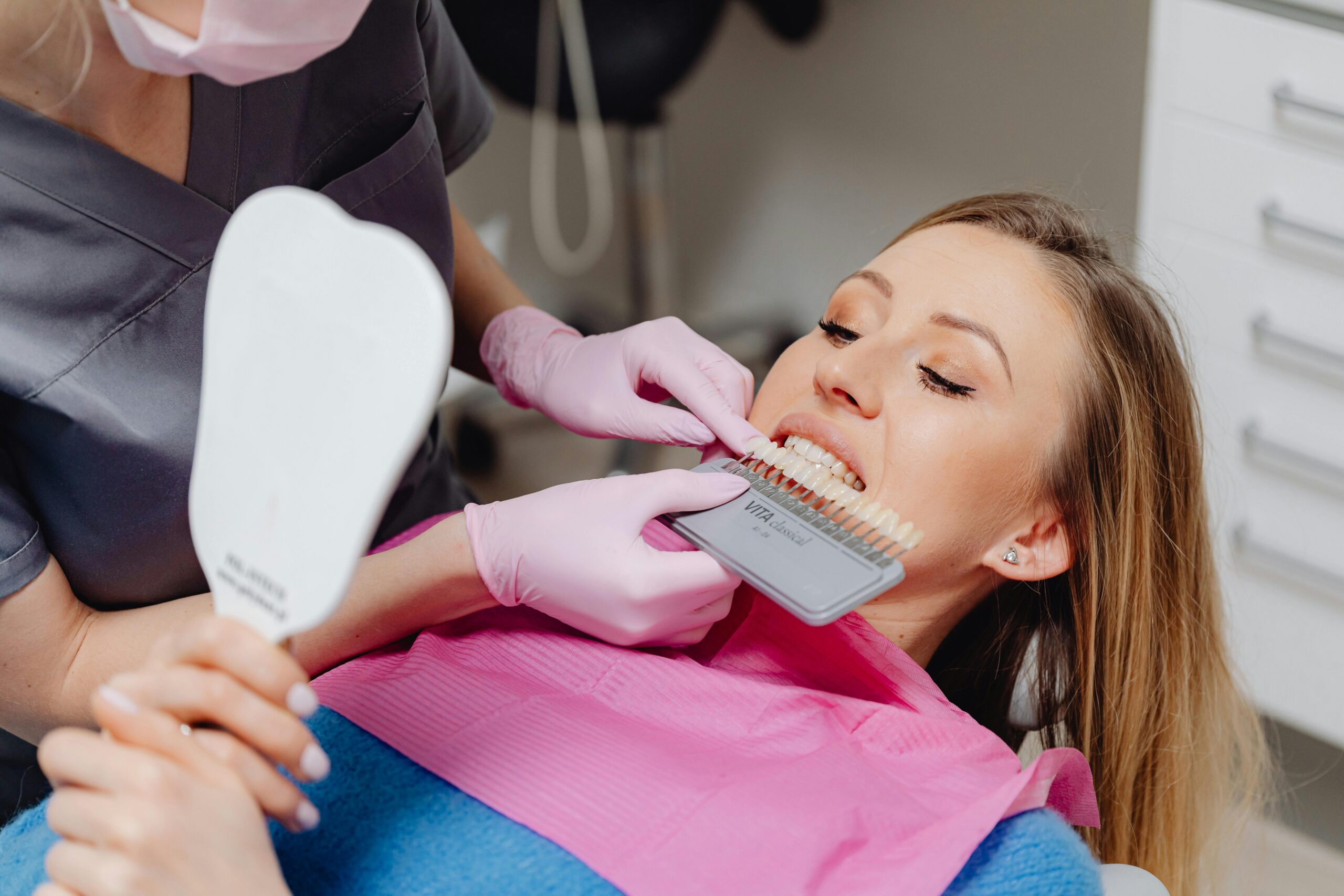
Before preparation begins, the team maps out the size, shape, and shade of your veneers. This planning stage is what ensures the final result looks proportionate to your face and consistent across all treated teeth. Shade selection is done carefully to complement your skin tone and coordinate with any untreated teeth that will remain visible.
Step 3 — Tooth Preparation
At your preparation appointment, the team removes a thin layer of enamel from the front surface of each tooth receiving a veneer. The amount removed is minimal but sufficient to allow the veneer to sit flush with the surrounding teeth rather than appearing bulky.
Local anesthesia is used to keep the appointment comfortable. Once preparation is complete, precise impressions are taken and sent to the dental lab for fabrication.
Temporary veneers are placed on the prepared teeth to protect them and give you a preview of the general shape and size of your final restorations while the permanent ones are being made.
Step 4 — Bonding Your Permanent Veneers
When your permanent veneers return from the lab, you come in for your bonding appointment. The team checks the fit, shape, and shade of each veneer carefully against your teeth and the surrounding smile before committing to the final bond.
Minor adjustments can be made at this stage. Once the patient and the Clear Essence Family Dentistry team are both satisfied with the appearance and fit, each veneer is bonded permanently to the prepared tooth using a strong dental adhesive and cured with a specialized light.
Step 5 — Follow-Up and Long-Term Care
A brief follow-up appointment is scheduled after bonding to check your bite, confirm comfort, and address any questions. From that point, your veneers are part of your smile.
The team will review care guidelines at your bonding appointment. With proper maintenance, porcelain veneers last ten to fifteen years or longer before replacement becomes necessary.
How to Care for Your Porcelain Veneers
Veneers are durable and stain-resistant, but they are not indestructible. The habits that protect natural teeth also protect your veneers.
Brush and floss normally. Veneers do not change your oral hygiene routine. Brush twice daily with a non-abrasive toothpaste and floss daily. Keeping the gum tissue around your veneers healthy is just as important as the veneers themselves.
Wear a nightguard if you grind your teeth. Grinding places significant force on teeth and restorations. If the team identifies signs of grinding at your consultation or any subsequent exam, a custom nightguard will be recommended to protect your veneers from premature wear.
Avoid using your teeth as tools. Opening packaging, biting nails, or chewing on hard objects like ice and pen caps puts localized force on teeth that can chip or crack a veneer. These habits are worth breaking regardless of whether you have veneers.
Limit staining foods and drinks. Porcelain is more stain-resistant than natural enamel, but the bonding material at the edges of veneers can discolor over time with heavy exposure to coffee, tea, red wine, and tobacco. Rinsing after consuming staining substances and maintaining regular professional cleanings helps preserve the appearance of your veneers long term.
Keep your regular dental appointments. Veneers are checked at every routine exam and cleaning at Clear Essence. Dr. Obhade monitors their condition, the health of the surrounding gum tissue, and the integrity of the bonding material at each visit.
Porcelain Veneers for Patients Across South St. Louis County
Clear Essence Family Dentistry is located at 10777 Sunset Office Dr. in Sunset Hills, accessible for patients throughout the South St. Louis County area. Patients considering veneers come to us from Kirkwood, Crestwood, Webster Groves, Sappington, Fenton, Valley Park, Meacham Park, and communities near Laumeier Sculpture Park, St. Louis Community College, and the Watson Road Corridor.
Choosing a dentist for porcelain veneer treatment is a decision that deserves careful consideration. Veneers are a permanent commitment, and the outcome depends on the quality of planning, preparation, and execution involved. Patients throughout South St. Louis County choose Clear Essence Family Dentistry for veneers because they trust that recommendations are honest, treatment is conservative, and the result will look like their smile at its best – not someone else’s.
Ready to Find Out If Veneers Are Right for You?
A veneer consultation at Clear Essence Family Dentistry is a straightforward conversation. The team will evaluate the patient’s teeth, listen to what they want to change, and provide an honest assessment of whether veneers are the right path and what the process would involve. There is no pressure to commit at the consultation.
Accepting new patients from Sunset Hills, Kirkwood, Crestwood, Sappington, Fenton, Webster Groves, Valley Park, Meacham Park, and throughout South St. Louis County.