
A dark spot or a twinge of sensitivity can leave you wondering whether a cavity will disappear if you brush more carefully.
Early tooth decay may be stopped or reversed before the surface breaks down. Once a cavity has created a hole, however, the missing tooth structure does not grow back naturally. Professional evaluation is needed to determine whether the area requires preventive management, a restoration, or another treatment.
At Clear Essence Family Dentistry in Sunset Hills, MO, we help you understand that distinction. We explain what we find and recommend care based on your tooth’s condition, with an emphasis on preserving healthy structure.
What Is the Difference Between Early Decay and a Cavity?
Tooth decay is a process. Bacteria in dental plaque use sugars and other fermentable carbohydrates to produce acids. Those acids can remove minerals from the tooth.
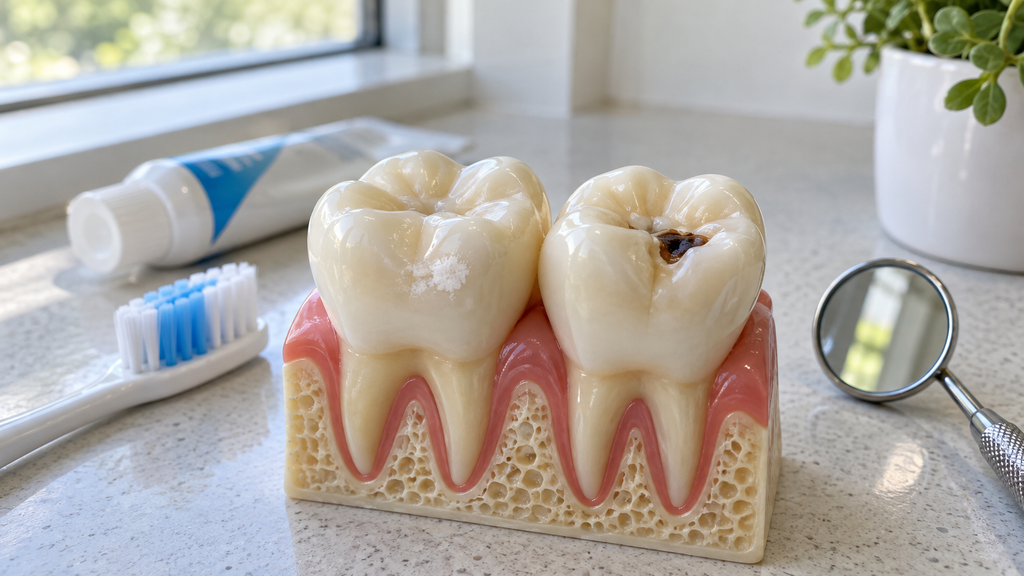
Enamel, the hard outer covering, can lose minerals before a visible hole forms. This early stage is often called a noncavitated lesion, meaning the surface has not broken down.
If mineral loss continues, the tooth surface can weaken and collapse. The resulting hole is a cavity, also called a cavitated lesion.
That distinction matters because regaining minerals is different from rebuilding a missing piece of tooth. Brushing more often cannot fill a hole that has already formed.
How Does Remineralization Work?
Saliva supplies minerals, including calcium and phosphate, that can return to weakened enamel. Fluoride helps support remineralization and makes enamel more resistant to acid attacks.
When protective factors outweigh the conditions causing mineral loss, some early lesions can become more stable or regain minerals. Fluoride toothpaste and appropriate daily care are part of that process.
This does not mean every early lesion will reverse. Its location, activity, your saliva, diet, and fluoride exposure all influence the outcome.
It also does not mean you should wait for a spot to disappear before seeking advice. An early lesion may still be visible after its activity changes, and appearance alone cannot tell you whether decay is progressing.
Our preventive care includes practical guidance to help you understand your risks and support healthier habits between visits.
Does Every Cavity Need a Filling?
No single treatment fits every area of decay.
For an early lesion with an intact surface, a dentist may recommend preventive measures and reassessment rather than a filling.
When a hole has formed, a restoration is often needed to replace missing structure and restore function. However, selected cavitated lesions may sometimes be managed with professional measures intended to stop their activity without immediate restoration.
Stopping decay is called arresting it. Arresting a lesion does not rebuild the missing tooth, and a restoration may still be needed for function, protection, or cleaning access.
| Finding | What it may mean for care |
| Early mineral loss with an intact surface | Preventive measures and professional monitoring may be appropriate. |
| A cavity with lost tooth structure | A filling or another restoration is often needed; selected cases may have other professional management options. |
| Extensive structural damage | The dentist evaluates whether a larger restoration is needed. |
| Signs of a pulp problem | Further diagnosis is needed to determine appropriate treatment inside the tooth. |
These are general considerations, not a way to choose treatment at home.
How Does a Dentist Decide What an Area Needs?
Your dentist considers the individual lesion and your overall risk of developing more decay.
The Tooth’s Surface and Location
The examination helps establish whether the surface remains intact, where the lesion is located, and whether it can be cleaned effectively.
Decay between teeth or beneath an existing restoration may not be visible to you. X-rays may be recommended when they would provide useful information.
A dark spot does not automatically establish decay, and a white or chalky area can have more than one explanation.
The Extent and Activity of Decay
The dentist assesses how far the damage appears to extend and whether the lesion shows signs of ongoing activity.
An X-ray can contribute information about depth, but it is interpreted alongside examination findings and history. The size of a visible spot or the presence of pain cannot answer every diagnostic question.
Your Personal Risk Factors
Previous cavities, frequent sugar exposure, plaque control, fluoride use, and reduced saliva can influence the plan.
Tell us about persistent dry mouth, medication changes, and difficulties with daily cleaning. These details can help explain why decay develops even when someone feels they are brushing consistently.
Our dental exams and cleanings provide an opportunity to review those findings and discuss practical next steps.
What Does Professional Monitoring Involve?
Monitoring an early lesion is an active care plan. It should include measures to reduce the conditions causing decay and a schedule for checking the response.
Your dentist may discuss changes to brushing, cleaning between teeth, eating patterns, or fluoride use. Recommendations depend on your age, risk, and clinical findings.
At reassessment, the team checks whether the area appears stable or has progressed. Additional imaging may be recommended when indicated.
Before leaving, ask:
- What was found, and why is monitoring appropriate?
- What should I change at home?
- When should the area be checked again?
- Which symptoms should prompt an earlier call?
Monitoring should not mean postponing an examination or repeatedly delaying treatment that has already been recommended.
What If the Tooth Needs Restorative Treatment?
A filling replaces damaged or missing tooth structure when that approach is suitable. The preparation and material depend on the location, extent of decay, and remaining healthy tooth.
More extensive structural damage may call for a crown, which covers and protects the remaining tooth.
A crown and root canal treatment serve different purposes. A crown restores structure; root canal treatment addresses a diagnosed problem involving the pulp, the tissue containing nerves and blood vessels.
When root canal treatment is appropriate, the tooth also needs a suitable restoration afterward. Deep decay alone does not determine the exact pulp procedure, and some cases may require specialist evaluation.
A restoration repairs the affected area, but it does not remove every factor that contributed to decay. Prevention remains part of the plan after treatment.
What Can You Do at Home?
Daily habits help manage cavity risk and support professional care. They cannot replace the assessment of a suspected cavity.
Brush With Fluoride Toothpaste
Brush twice daily with fluoride toothpaste and a soft-bristled toothbrush. Clean gently and thoroughly rather than using more pressure.
If brushing is uncomfortable or certain areas are difficult to reach, ask for a demonstration. For children, caregivers should supervise toothpaste amounts and help according to the child’s age and abilities.
Clean Between Teeth Daily
Use floss or another suitable interdental cleaner to reach areas a toothbrush cannot clean effectively.
Tell us if tight contacts, dental work, or limited hand movement makes this difficult. A method that suits your mouth and abilities is more practical than a routine you cannot maintain.
Reduce Repeated Sugar Exposure
Frequent sugary snacks and prolonged sipping of sweetened drinks can repeatedly expose teeth to conditions that promote decay.
Consider having sweet foods with meals rather than grazing throughout the day. Choose water between meals instead of keeping a sugary drink nearby for continuous sipping.
Discuss Dry Mouth
Saliva helps protect teeth. Persistent dryness deserves attention because reduced saliva can increase decay risk.
Drink water for comfort and tell your dental team about ongoing symptoms. Ask your dentist or healthcare professional to review possible contributing factors. Do not stop prescribed medication on your own.
What Changes Should Prompt an Appointment?
Schedule an evaluation if you notice:
- A new white, brown, or dark area.
- A visible pit, hole, or broken surface.
- Sensitivity that persists or keeps returning.
- Pain when biting or chewing.
- Food repeatedly getting trapped in one area.
These signs do not prove that you have a cavity. They are reasons to have the tooth assessed, and some decay produces no noticeable symptoms.
Contact a dental professional promptly for significant swelling, worsening pain, or fever with dental symptoms. Difficulty breathing or swallowing requires emergency medical attention.
Get Clear Answers About a Possible Cavity
You do not need to determine the stage of decay on your own. An examination can help establish whether an area needs preventive care, monitoring, or restorative treatment.
At Clear Essence Family Dentistry, we explain your findings and the reasons behind our recommendations. We welcome questions about alternatives, daily care, and what the proposed plan involves.
Contact Clear Essence Family Dentistry to schedule a dental examination and get personalized guidance about a suspicious spot, sensitivity, or another concern.